Fe+male Tech Hero 2025: Hoe Angelique Balguid wereldwijd strijdt voor betere beroertezorg
dec 15, 2025 | 4 minuten leestijd
“Als je mensen wilt raken, heb je meer nodig dan cijfers alleen. Pas dan komen mensen in beweging.” Met die overtuiging zet Angelique Balguid zich al jaren in om de zorg voor beroertepatiënten wereldwijd te verbeteren. Tot op het hoogste podium: de Wereld Gezondheidsorganisatie en de Verenigde Naties. En binnenkort hoopt ze de leden van de Europese Commissie en het parlement te woord te staan.
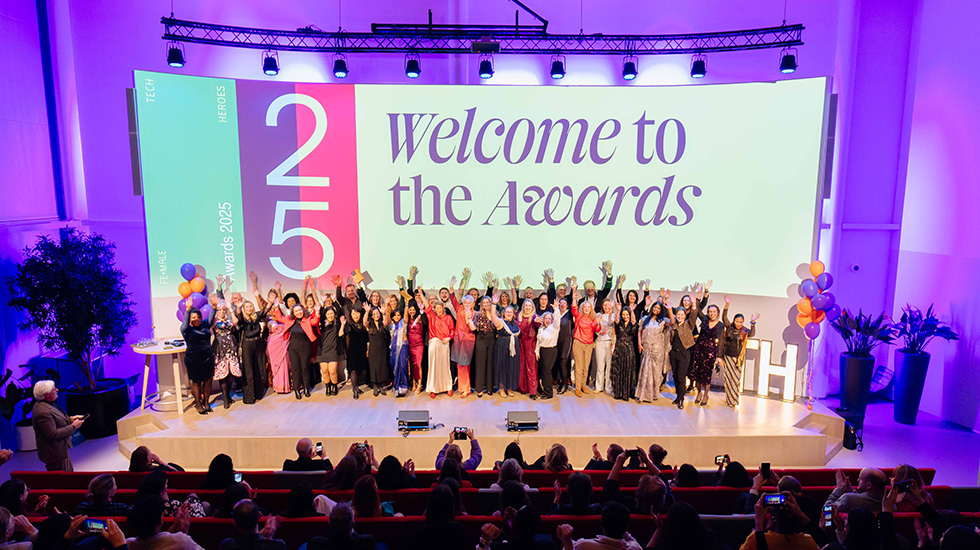
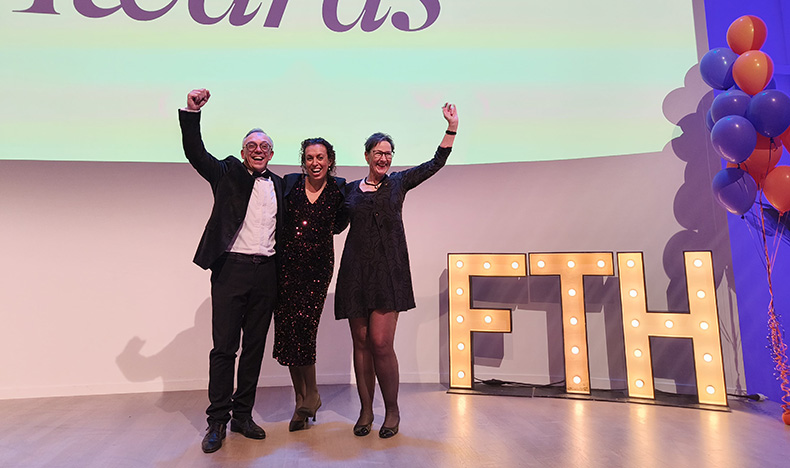
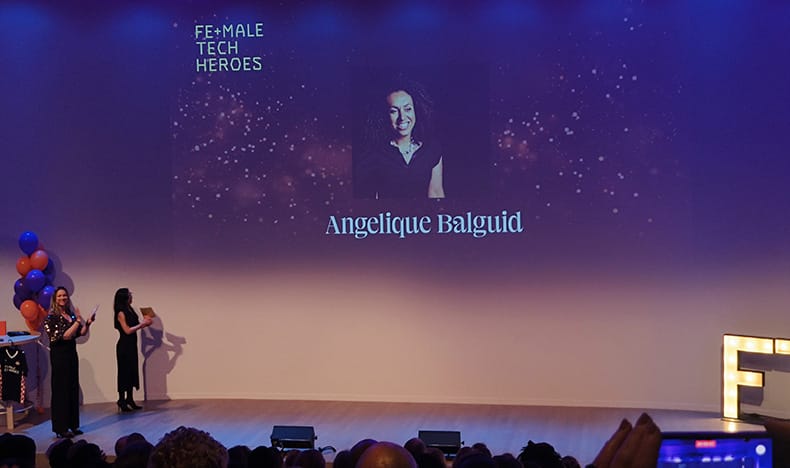
Het is de combinatie van visie, daadkracht en menselijkheid die heeft geleid tot haar nominatie voor de titel Fe+male Tech Hero 2025. Een erkenning die ze zelf omschrijft als onverwacht en overweldigend. “Het is echt een eer om tussen zulke inspirerende rolmodellen te mogen staan.” De award werd gewonnen door Carmen van Vilsteren.
De Fe+male Tech Heroes Award zet vrouwelijke rolmodellen in het zonnetje. De nominatie is bedoeld voor vrouwen die impact maken in hun vakgebied, grenzen verleggen en anderen inspireren. Voor Angelique, Sr Dir. Global Portfolio Leader Neurovascular bij Philips, voelt het vooral als erkenning voor haar werk om beroertezorg op de kaart te zetten. “Deze nominatie komt niet alleen op mijn conto, dit is het resultaat van vele jaren werken met een groep enorm gepassioneerde collega’s en partners.”
Veerkracht en verbetering
Haar verhaal begint in een hecht, multicultureel gezin. Ze is geboren en groeide op in Berkel en Rodenrijs, als dochter van een Marokkaanse vader en een Servische moeder die als jonge gastarbeiders naar Nederland kwamen. Ze leerden de taal, werkten hard en bouwden stap voor stap een nieuw bestaan op. Ze waren vastberaden om het goed te doen in hun nieuwe thuisland. Het gezin verhuisde naar Limburg voor het werk van vader. “Opgroeien met een allochtone achtergrond in Limburg was soms pittig. Maar het heeft ervoor gezorgd dat ik leerde voor mezelf op te komen en mezelf te bewijzen. De drive om mezelf constant te verbeteren komt daar ook vandaan.” Het is de mentaliteit van haar ouders, haar doorzettingsvermogen en ambitie, die later haar leiderschap zouden kleuren.
Een toekomst in gezondheidstechnologie
De interesse in zorg sluimerde al vroeg, maar technologie sprak haar ook enorm aan. “Toen ik op het VWO een brochure las over de opleiding Biomedische Technologie, dacht ik: dit is het. Technisch en medisch in één.” Het bleek de perfecte match. Na haar promotie aan de Technische Universiteit Eindhoven kwam ze bij Philips terecht, waar ze alle ruimte en mogelijkheden kreeg om zich te ontwikkelen van klinisch expert tot strategisch leider op het gebied van beroertezorg. “Je bent bezig met technologie die een grote impact kan maken op het leven van patiënten. Dat is de rode draad door mijn carrière.”
Revolutie in de beroertezorg
In de afgelopen jaren heeft de zorg voor mensen met een beroerte een stille maar baanbrekende revolutie doorgemaakt. Tot 2015 konden artsen bij een ernstige beroerte, veroorzaakt door een afsluiting van een groot bloedvat in de hersenen, weinig meer doen dan medicijnen geven die het stolsel oplosten, met wisselend succes. Maar toen bewezen internationale studies dat een nieuwe techniek, de zogenoemde thrombectomie, levens kon redden en herstel spectaculair kon verbeteren. Dat werd het kantelpunt in de beroertezorg, vertelt Angelique.
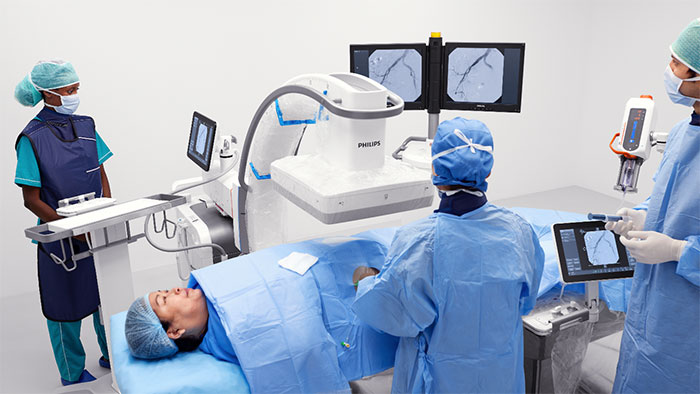
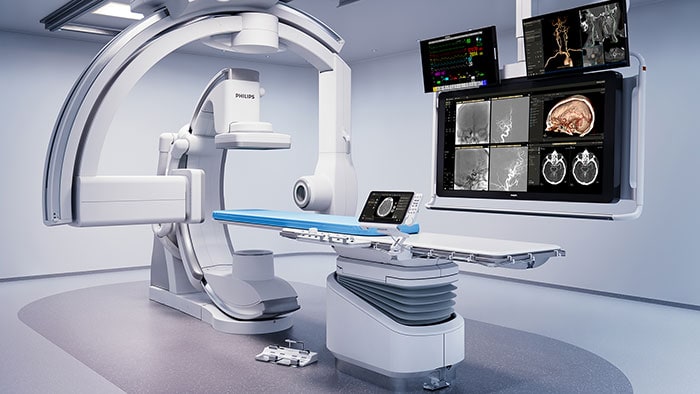
De revolutionaire inzichten uit deze studies lieten zien dat tijdige interventie het verschil kan betekenen tussen een leven met zware beperkingen en volledig herstel. “Na een thrombectomie, een ingreep die soms maar enkele minuten duurt, kunnen patiënten herstellen alsof er nooit een beroerte is geweest. Dat voelt bijna magisch, zeker als je ziet hoe verwoestend een onbehandelde beroerte kan zijn.” En deze operatie vindt plaats met het Azurion systeem, een interventioneel röntgensysteem dat Philips speciaal hiervoor heeft ontwikkeld.
Toegang tot zorg beperkt
Die realiteit maakte iets in haar los. In 2020 kreeg ze verantwoordelijkheid voor neurovasculair portfolio bij Philips en zag ze tegelijkertijd de harde cijfers: slechts vijf procent van de beroerte patiënten krijgt enige vorm van behandeling en maar twee procent krijgt een thrombectomie. “Dat was een eyeopener. Hoe kan het dat zulke effectieve zorg zo weinig mensen bereikt? Het bleek dat slechts een beperkt aantal ziekenhuizen deze zorg konden leveren; bij lange na niet voldoende om alle patiënten te behandelen, Met als gevolg dat je postcode bepaalt of je overleeft en in welke toestand.”
Van technologie naar systeemverandering
Angelique realiseerde zich dat het leveren van betere technologie niet genoeg was. Er moest verandering komen op beleidsniveau. Dus begon ze te bouwen, aan een team van collega’s en partnerships met andere bedrijven en instellingen. “Ik ben mensen gaan samenbrengen. Bruggen bouwen met de World Stroke Organization en andere partijen. Dat is mijn kracht. Want dit kun je niet alleen als bedrijf of organisatie doen, dit moet je met elkaar doen. Dan kun je echt iets in beweging zetten.”
Mondiale coalitie met één stem
Het begon klein. Een eerste bijeenkomst tijdens de World Health Assembly, samen met ministers van gezondheidszorg, artsen en industrie. Daarna een rondetafel tijdens de Verenigde Naties. Vervolgens een coalitie met internationale partners, met medtech bedrijven zoals Philips en Medtronic. Het resultaat is een beweging die inmiddels internationale reikwijdte heeft. “Alle partijen begrepen: als iedereen zijn eigen verhaal verkondigt, is dat minder krachtig dan wanneer we één visie delen. Dat hebben we gedaan. En via een Europees consortium ligt dat gezamenlijke verhaal nu zelfs op tafel bij de Europese Commissie om overal in Europa beroertezorg op nationaal niveau te verbeteren.”
Lokale actie
Het is een mooi, concreet resultaat van haar persoonlijke missie om samen met haar partners veranderingen teweeg te brengen. De focus verschuift nu van bewustwording en pleitbezorging naar concrete implementatie in nationaal gezondheidsbeleid. Ze werkt hieraan met partners in onder meer Nederland, Italië en Egypte. “Global awareness is het begin, maar lokale implementatie is het doel. Het helpt enorm dat Philips hierachter staat en dit een prioriteit noemt.”
Persoonlijke missie met wereldwijde impact
Haar nominatie maakt haar zichtbaar voor een breder publiek, maar voor Angelique is het vooral een bevestiging dat ze op het juiste pad zit. “De nominatie is al een prijs op zichzelf.” Haar missie gaat veel verder dan persoonlijke erkenning. Ze wil dat beroertezorg een plek krijgt in nationaal beleid en dat landen de middelen krijgen om dit uit te voeren. “Als we dit voor elkaar krijgen, kunnen we miljoenen levens raken. Zoals de missie van Philips beschrijft: Better care for more people. Dat is waar ik het voor doe.”
Fe+male Tech Hero 2025: How Angelique Balguid Is Driving Global Progress in Stroke Care
“If you want to truly move people, you need more than numbers alone. That is when change begins.” With that conviction, Angelique Balguid has spent years working to improve stroke care across the globe. From the World Health Organization to the United Nations, she has brought the urgency of better stroke care to the world stage. Soon, she also hopes to address members of the European Commission and Parliament.
It is the combination of vision, determination and humanity that has led to her nomination for Fe+male Tech Hero 2025. She describes the recognition as unexpected and overwhelming. “It is truly a privilege to stand alongside such inspiring role models.” Carmen van Vilsteren won the award.
The Fe+male Tech Heroes Award highlights women in technology who push boundaries, make meaningful impact and inspire others. For Angelique, Senior Director and Global Portfolio Leader Neurovascular at Philips, the nomination feels like recognition for years of work to put stroke care on the global agenda. “This nomination is not just mine. It is the result of many years of collaboration with incredibly passionate colleagues and partners.”
Resilience and the drive to improve
Her story begins in a close-knit, multicultural family. Born and raised in Berkel and Rodenrijs, she is the daughter of a Moroccan father and a Serbian mother who came to the Netherlands as young migrant workers. They learned the language, worked hard and built a new life step by step, determined to succeed in their new home. Later, the family moved to Limburg for her father’s job.
“Growing up with a migrant background in Limburg was not always easy. But it taught me to stand up for myself and to prove myself. That drive to constantly improve comes from that period.” The mentality of her parents, together with her own resilience and ambition, would later shape her leadership style.
A future in health technology
Her interest in healthcare emerged early, but she also felt a strong pull toward technology. “When I came across a brochure for Biomedical Engineering in high school, I thought: this is it. It combines the technical and the medical.” It turned out to be the perfect match.
After completing her PhD at Eindhoven University of Technology, she joined Philips through a European talent program. There she developed from clinical expert into a strategic leader in stroke care. “You are working with technology that can have enormous impact on patients’ lives. That has been the red thread throughout my career.”
A revolution in stroke care
In recent years, stroke care has undergone a quiet but groundbreaking transformation. Until 2015, doctors had limited options for severe strokes caused by a major vessel blockage in the brain. Treatment relied mainly on medication to dissolve the clot, with mixed results. Everything changed when international trials proved that thrombectomy could save lives and dramatically improve recovery.
“That was the turning point in stroke care,” Angelique says.
The insights from these studies showed that timely intervention can mean the difference between lifelong disability and full recovery. “After a thrombectomy, a procedure that sometimes takes only a few minutes, patients can recover as if the stroke never happened. It feels almost magical when you know how devastating an untreated stroke can be.”
These procedures are performed using the Azurion image-guided therapy system, designed by Philips for interventions like these.
Limited access to care
This reality triggered something in her. In 2020 she became responsible for the neurovascular portfolio at Philips, and she immediately confronted the harsh numbers. Only five percent of stroke patients receive any form of treatment, and only two percent receive a thrombectomy.
“That was an eye-opener. How can such an effective treatment reach so few people? It turned out that only a limited number of hospitals were equipped to deliver this care, nowhere near enough to treat all patients. As a result, your postcode determines whether you survive and in what condition.”
From technology to system change
Angelique realised that providing better technology would not be enough. System-wide change was needed. So she began building a team of colleagues and forging partnerships with organisations and companies across the stroke ecosystem.“
I began bringing people together. Building bridges with the World Stroke Organization and other partners. That is my strength. You cannot do this as a single company or organisation. You have to do it together. Only then can you create real momentum.”
A global coalition speaking with one voice
It started small, with a first event during the World Health Assembly involving ministers of health, clinicians and industry. Then came a roundtable at the United Nations. This resulted in a growing coalition of international partners, including medtech companies such as Philips and Medtronic.
“All parties realised that if everyone tells their own story, the message gets diluted. But if we speak with one united voice, the impact is far greater. That is what we created. And through a European consortium, that unified message is now on the table with the European Commission to strengthen national stroke care systems across Europe.”
Local action
This is a concrete result of her personal mission to create progress together with partners. The focus is now shifting from awareness and advocacy to implementation in national health systems. She is working with partners in countries including the Netherlands, Italy and Egypt. “Global awareness is the beginning, but local implementation is the goal. Having Philips support this and recognise it as a priority makes a huge difference.”
A personal mission with global impact
The nomination brings visibility, but for Angelique it mostly confirms that she is on the right path. “The nomination itself feels like a prize.” Her mission extends far beyond personal recognition. She wants stroke care to become embedded in national health policy, and for countries to have the means to implement it.
“If we can achieve that, we can touch millions of lives. Just as the Philips mission says: Better care for more people. That is what drives me.”
Voor meer informatie

Contact informatie Contact informatie

You are about to visit a Philips global content page
Continue