Syd Mead: Sci-fi legend & Philips designer
When you put together a list of the most influential science fiction stories of all time, a few names would be on there without discussion. Like the dark dystopian tale of Blade Runner, the technological fever dream of TRON and the intergalactic space travels of Star Trek. All three of these genre classics have one thing in common: they share a designer. His name is Syd Mead and he helped create worlds that resonate to this day. And while he was crafting that hugely influential and innovative body of work, he used those same skills to develop ideas and design products for Philips.
Wild cat thinking
It’s the second half of 1968 when Head of Philips Design Knut Yran initiates “Design for tomorrow’s world”, a pre-development design initiative. He called it “wild cat thinking” (later wildcat sketching, and eventually wildcat dreaming). In his own words: “It is important that design activities should have a small, remote set-up for what the Americans call ‘wildcat thinking’, just as Technology has its laboratories. This little design laboratory should be away from the everyday ‘nuts and bolts’ of the industry and should be used for experimental design and pre-development. Bridging the gap between art and technology is not easy. Marrying dreams and reality is even more difficult, but nevertheless necessary in our dynamic and rapidly changing world. Artists and dreamers must learn to reach out for possible, and technologists must learn to reach out for the impossible.”
“Within ‘wildcat activities’, the designer can give free rein to his imagination, with the only restriction that his designs must contribute to alleviating poverty, providing assistance to people with disabilities, or solving educational problems in developing countries.”
Syd Mead: reality ahead of schedule
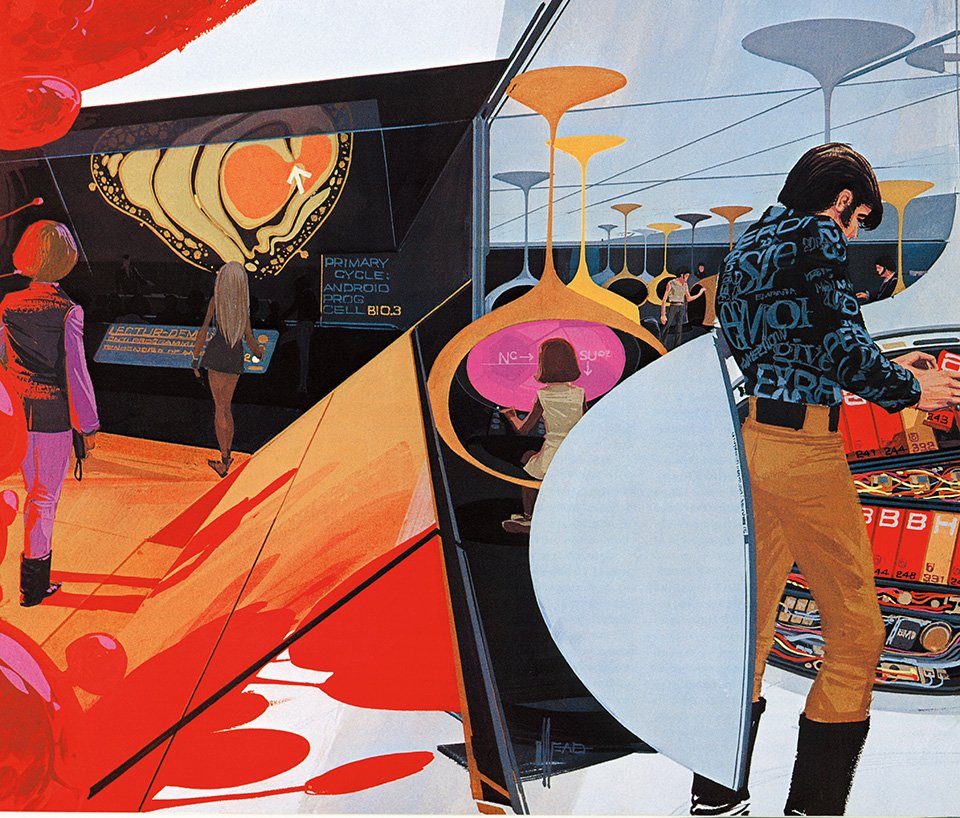
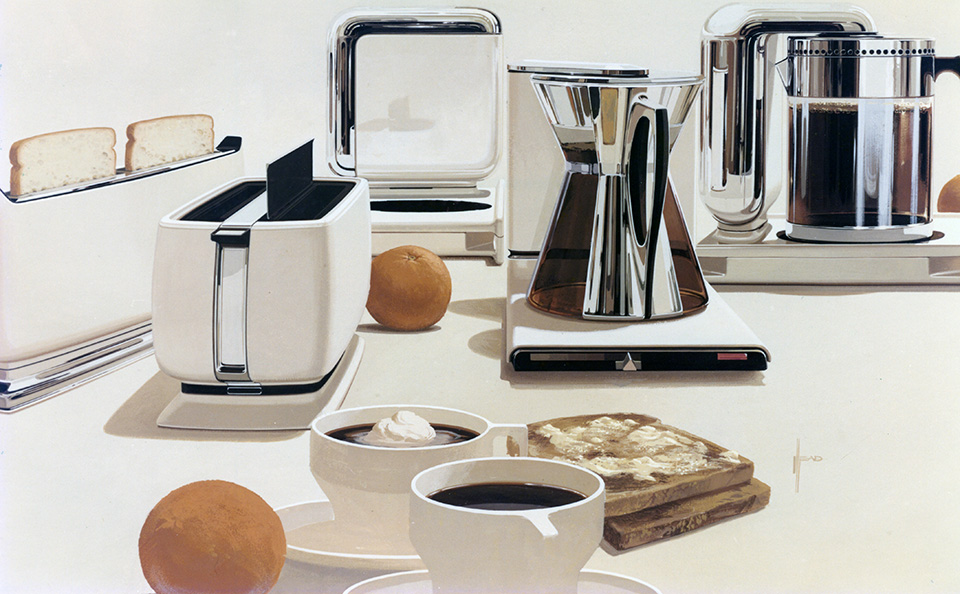
As part of these wildcat activities, Syd Mead was brought on board at Philips. He ended up spending twelve years at the company, designing everyday products like shavers and demostic appliances while imagining bold concepts for the far future. Mead’s vision went hand in glove with Philips: his futuristic designs worked because they were plausible. He described this approach as "Reality ahead of schedule" — a phrase that captures both his work as a visual futurist and Philips's own instinct to imagine boldly while staying grounded in real life. “We should celebrate and rehearse for a bright future and maybe it will come true. I don’t have time to illustrate misery or dystopian scenarios", said by Mead.
That shared instinct also helps explain why Philips sought out a 'futurist' like Mead in the first place. Working with outside creators reflects a habit that runs deep in Philips: questioning convention and imagining further, to keep design from settling into a comfortable sameness.
Mead first cut his teeth as a designer working for Ford, in their Advanced Styling’s Center. After leaving Ford to start his own company, he also started working for Hollywood. Star Trek, Aliens, Forbidden Planet, Mission to Mars and more productions all used objects and sets designed by Mead.
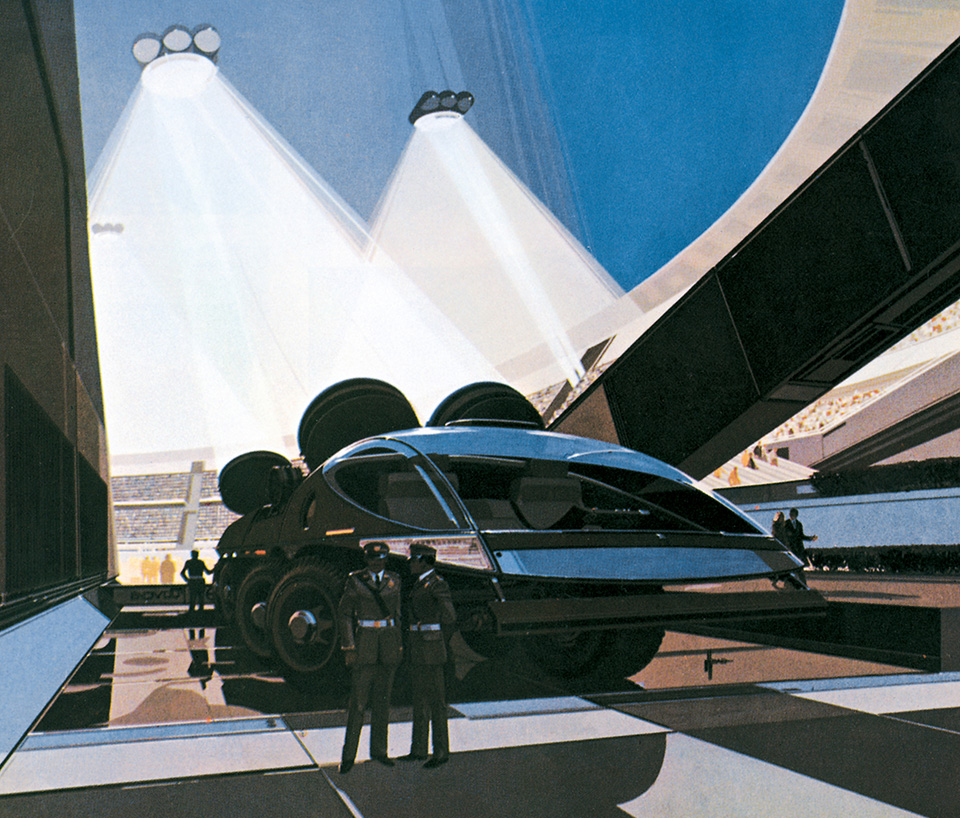
While Mead mostly worked on objects, he also majorly contributed to the TELL: the Teacher-assisting Electronic Learning Link. This project was part of a future vision for an electronic school - Philips’ reaction to rising illiteracy levels and a shortage of qualified teachers.
Mead for healthcare
In his time for Philips, Mead also worked on health technology projects. Like a fully integrated care environment, with the ability to be customised according to the specific needs of the patient and the type of care, like an intensive care unit or a hospital room. A futuristic idea. Wild, especially in the 70’s. But today? It’s not far away from reality at all.
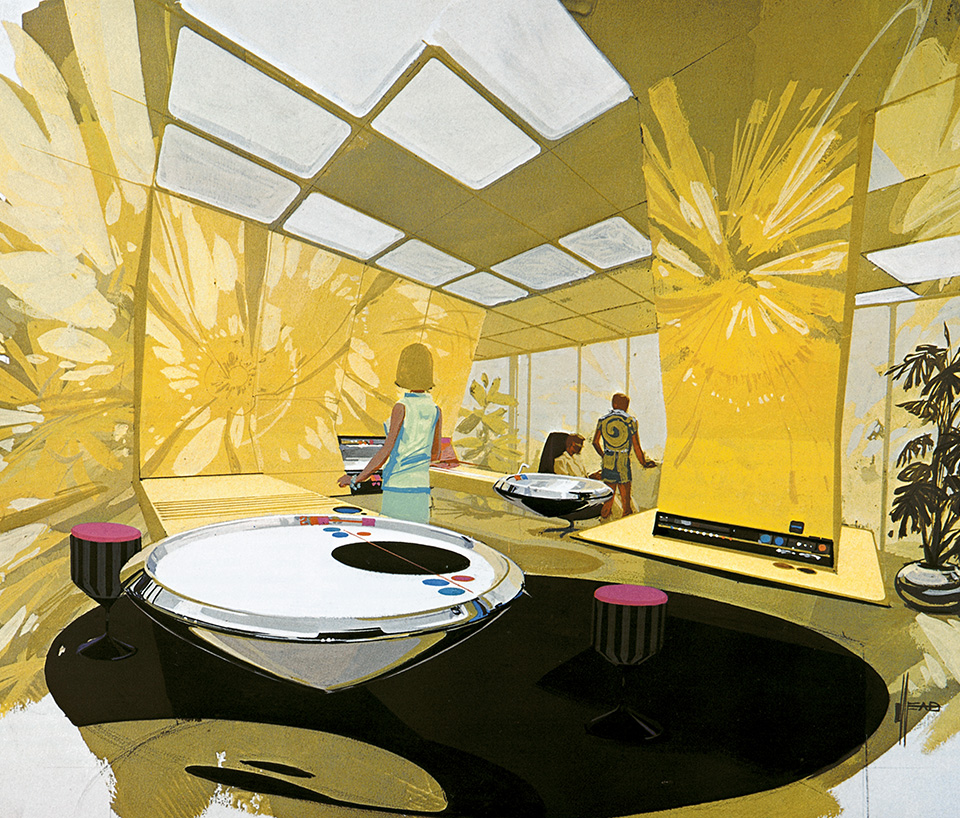
Later on, Syd Mead and Philips would put the space in office space. The designer looked beyond rows of computers to design a sculpturally designed system of operating panels. All the servicing parts would be banished to the basement, with everything from the position of the desks, cupboards and other units fully movable and changeable in order to fit constantly changing patterns of workflow.
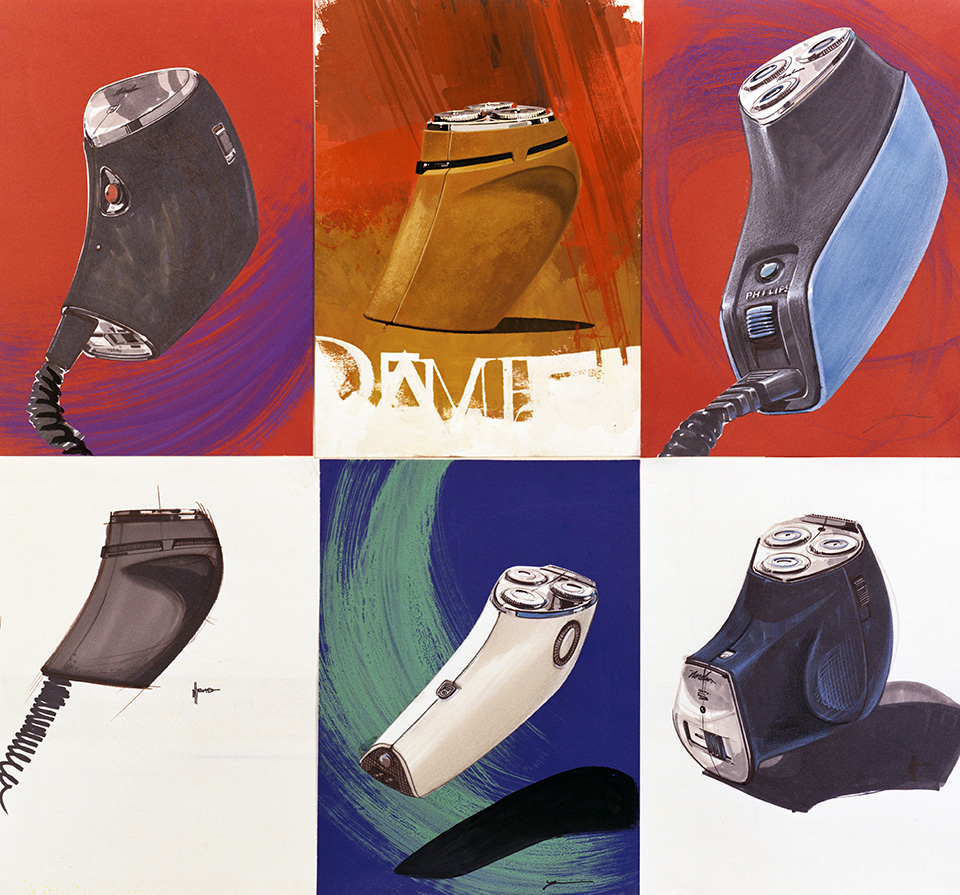
Science reality?
17 – 25 October 2026, Philips Museum.
Wild-cat dreaming was about experimenting. About bridging the abyss between experimental design fantasy and the practical reality of product design. As Mr. H.A.C. van Riemsdijk, vice president of Philips, said during a speech at the Concern Industrial Design Symposium in 1970: ‘The public can accept designs for the future, rather than of the future. Daring creativity must ask for evaluation in terms of practicality.’ The legacy of Syd Mead is a great example of that.
The future visions and designs of Syd Mead are part of Philips Design. Soul & Science. A pop-up exhibition in the Philips Museum during Dutch Design Week. Soul & Science looks at the future of care and how the world we live in today affects our view of the future.
Sources: [1] Philips Company Archives
[2] Past tense, future sense: Competing through 80 years of Design , Stefano Marzano

