135 Years of Caring for People
For more than a century, Philips has been an essential part of the history of Eindhoven and the Brainport region that emerged from it. Philips’ role extends beyond that of innovator and employer: throughout the years, the company has also made a social impact through distinctive social initiatives. These initiatives show how Philips has made a difference in the lives of employees and society alike, and how that impact spread from Eindhoven to the rest of the world.
1. The Sickness Fund
Philips’ social commitment has been part of the company since its earliest years. In 1900, employees were first able to make use of the so-called Ziekenpot (“Sickness Fund”), which provided 70% of wages during illness. This benefit was one of the first of its kind in the Netherlands. In the years that followed, attention to employee wellbeing expanded further: the Medical Service, established in 1909, provided free access to general practitioners as well as free medicines and medical supplies for employees and their families.
The addition of services such as midwifery care, a child health clinic and a pharmacy eventually led, under the leadership of Dr. Burger in 1928, to the creation of the Philips Health Service, which also included a fully equipped outpatient clinic. The Medical Service is regarded as the cradle of occupational healthcare in the Netherlands, and the organization of the Philips Health Service served as a model both nationally and internationally.
In the 1930s, Philips also led a large-scale initiative introducing preventive scans in the fight against tuberculosis. We share more about this successful project in our article on 135 years of innovation.
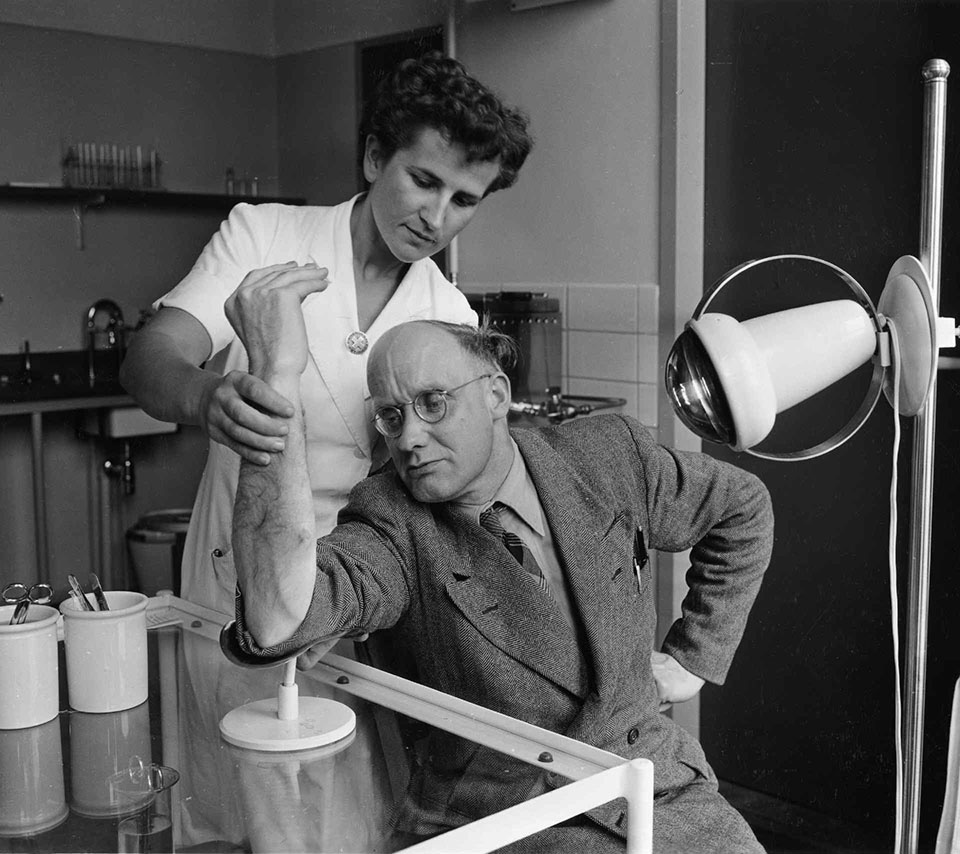
Physiotherapy using an Infraphil lamp in the Philips Health Centre on Willemstraat, Eindhoven (NL), 1953.
2. The Pension Fund
Philips was also a pioneer in the Netherlands when it came to pensions. Since 1913, Philips employees could rely on support from the Philips Pension Fund. The fund not only provided old-age pensions, but also disability benefits and support for widows and orphans.
For employees facing financial difficulties, Philips offered additional assistance through the Philips Support Fund. The company also recognized early on the importance of supporting large families: through the Philips Child Allowance Fund, employees with more than three children were entitled to financial support. In 1941, the Dutch Child Benefit Act came into force nationwide.
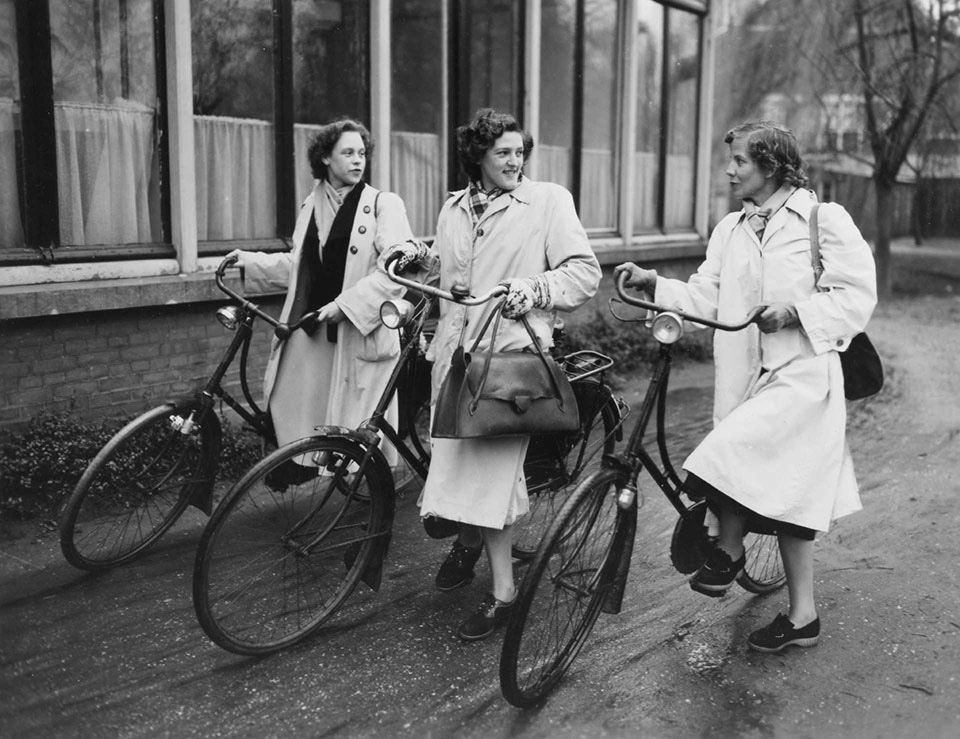
Team of female social workers from Philips Social Affairs department, 1950.
3. Philips Sport Vereniging
One of Philips’ most recognizable initiatives is PSV, the Philips Sports Association (Philips Sport Vereeniging). PSV started in 1913 as a sports club for employees in the broadest sense of the word. With departments for athletics, football, cricket, korfball, gymnastics, fencing, pigeon racing and hockey, there was something for every sports enthusiast.
The growth of PSV also became physically visible: Philips managed no fewer than 40 hectares of sports fields. PSV’s football division became by far the most successful, winning its first national championship in 1929 with a team consisting entirely of Philips employees. Nearly a century later, we know this was only the beginning of many more championships to come.
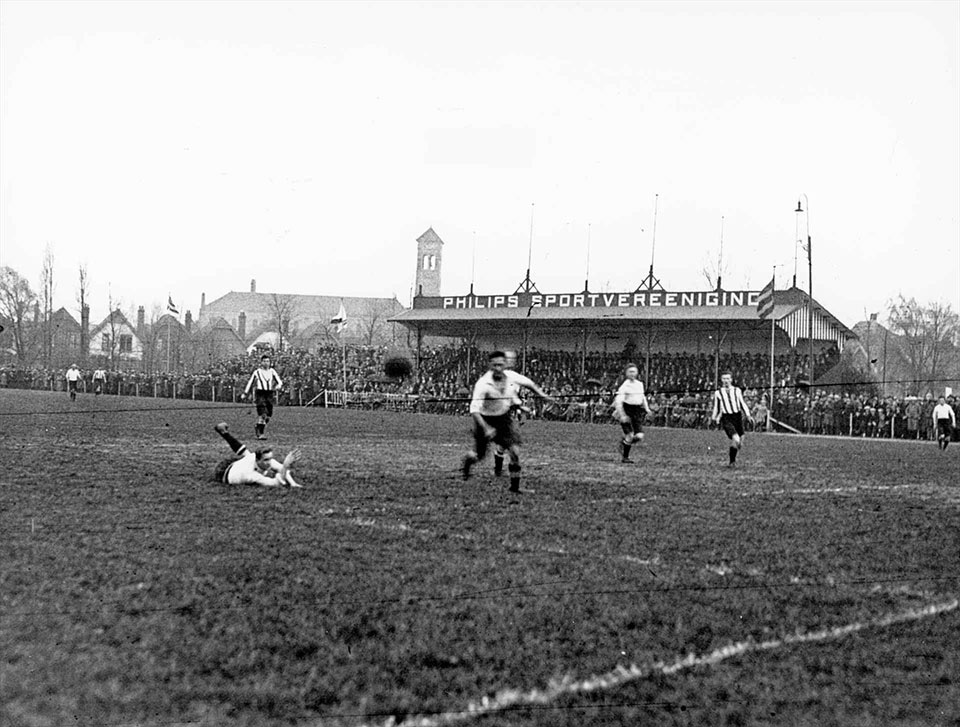
PSV football match in Philips Sports Park, Eindhoven (NL), 1920s.
4. The Stirling Engine and the Club of Rome
This mindset helps Philips continue to set — and achieve — ambitious environmental goals through its Impact Ambitions, an integral part of the company’s global strategy. Philips’ new five-year Impact Ambitions focus on making healthcare more accessible and sustainable, while supporting the well-being of employees and people around the world. Since 2020, Philips has operated on a fully carbon-neutral basis, and EcoDesign has been fully embedded into the innovation process. This approach drives energy-efficient product innovation while reducing material use.
Under the leadership of Frits Philips, president of Philips from 1961 to 1971, environmental care also became an important focus within the company. In 1970, he instructed all business divisions to actively prioritize environmental management. From that moment onward, increasing attention was paid to the cleaning and responsible processing of industrial waste, the recovery of raw materials and energy conservation.
By the late 1960s, Philips was already contributing to the preparation of The Limits to Growth, the influential report by the Club of Rome that helped raise global environmental awareness in 1972. A project particularly close to Frits Philips’ heart was the development of the Stirling engine: an innovative hot-air engine with virtually no exhaust emissions. Although large-scale application in cars ultimately did not materialize, the technology was successfully used in generators and refrigeration systems, among other applications. In this way, Philips demonstrated early on that technological innovation and social responsibility can go hand in hand.
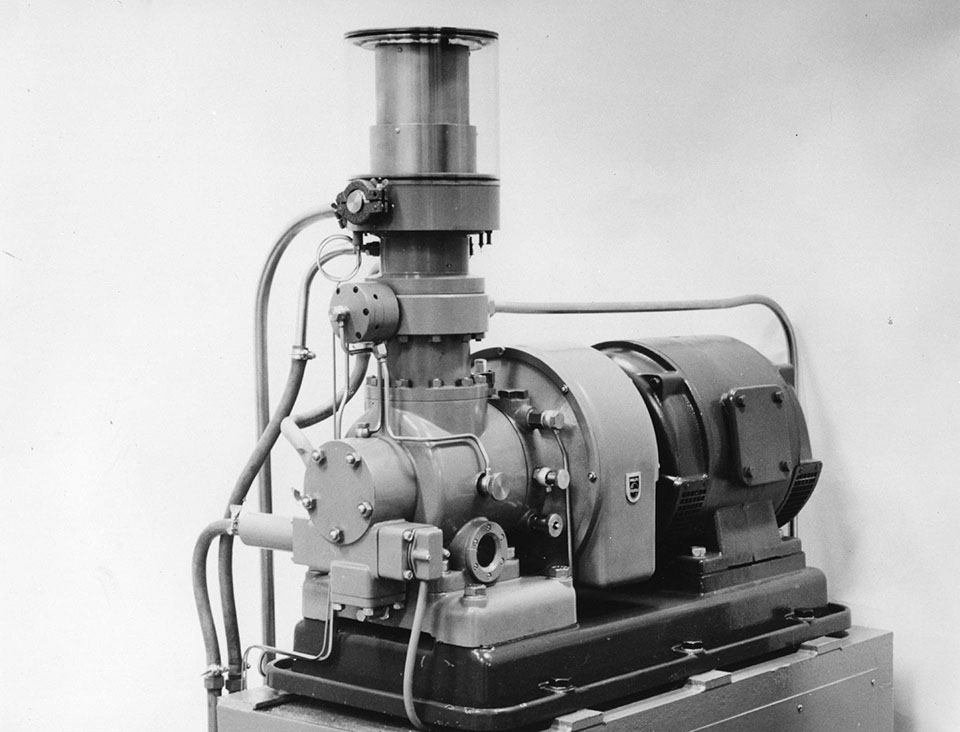
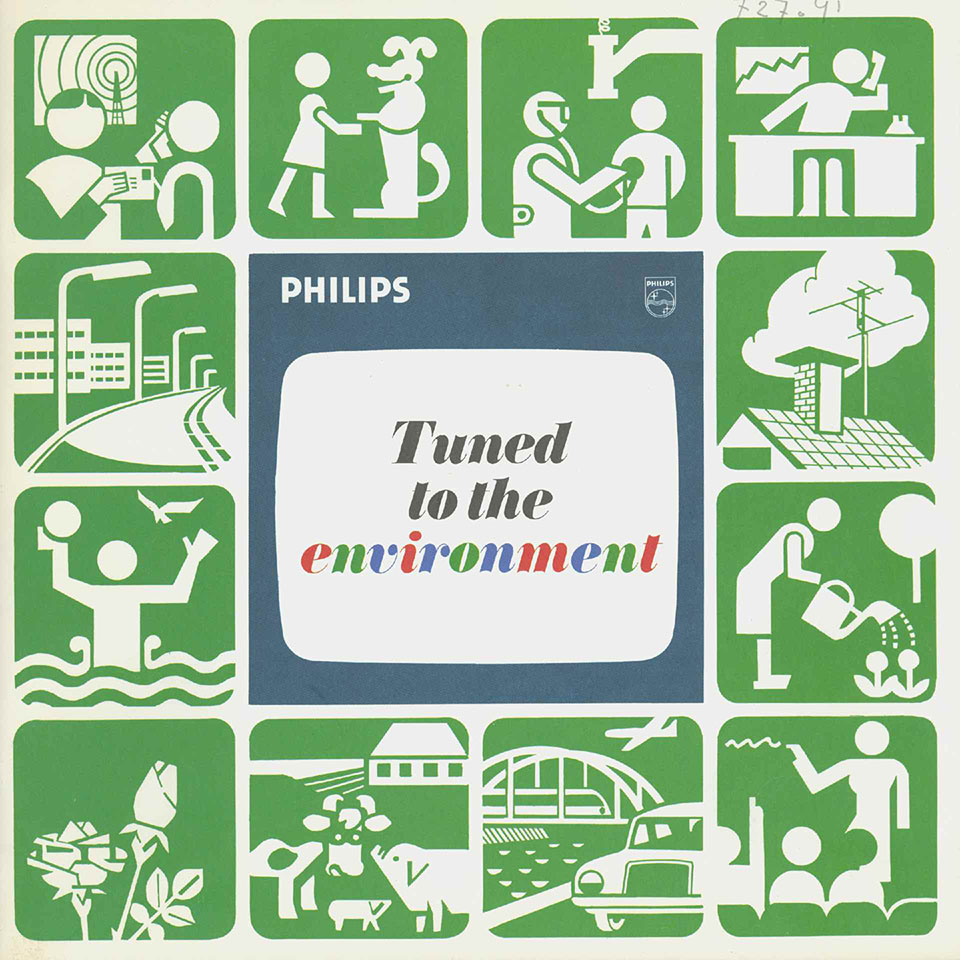
1. Laboratory setup of a cold-gas cryogenerator developed at Philips Research Laboratories (NatLab), ca 1965. 2. Tuned to the environment: front cover of brochure of Philips Pollution Control Office, 1977.
5. The Philips Foundation
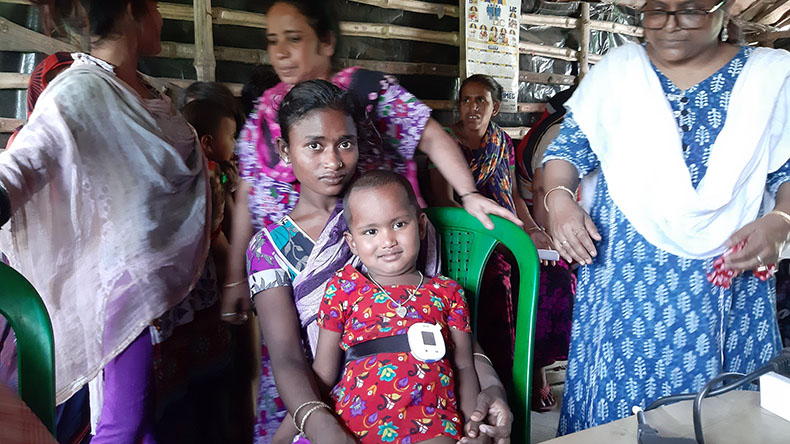
As Philips expanded across countries and continents, its social impact also reached further around the world. This led to the establishment of the Philips Foundation in 2014, with one clear ambition for 2030: to improve access to healthcare for 100 million people in underserved communities.The Foundation works toward this goal by providing medical equipment to healthcare workers in hard-to-reach areas and by helping establish high-quality clinics in places where such facilities do not yet exist.
Recent projects include the deployment of mHealth tools to combat pneumonia in young children and the use of solar-powered mobile CT systems to deliver appropriate medical solutions to underserved communities. In doing so, Philips demonstrates that social engagement — from Eindhoven to far beyond — has remained a constant throughout the years.